private hospitals
222 Views
Revolution in the Treatment of Genetic Hair Loss
Posted By نور أمين Nour Amin |
2025-08-04
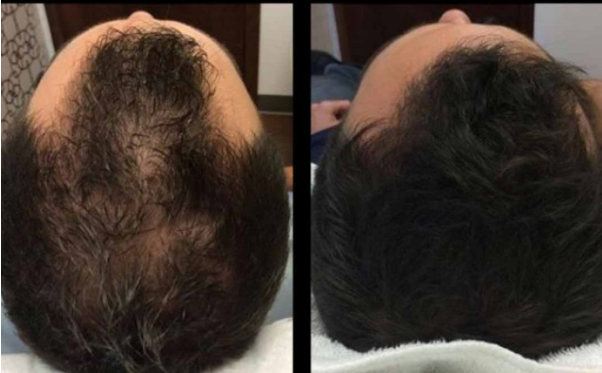
Stem cells are used to enhance hair regrowth, unlike conventional methods for treating hair loss. But what exactly are stem cells for genetic baldness? How are they used? And what are the risks involved?
Stem cells represent a new revolution in the treatment of genetic diseases—but how effective are stem cells in treating genetic baldness? Here are the most important details about stem cells for genetic baldness, their expected results, and potential risks.
Stem Cells for Genetic Baldness
Stem cells are used to treat genetic baldness after their ability to strengthen and regenerate hair follicles was discovered. According to clinical and preclinical studies, their effectiveness includes:
• Stem cells are used to enhance hair regrowth through various strategies, as they contribute to regenerating or forming hair follicles.
• Doctors use stem cells due to their ability to differentiate into various cell types, which means they can regenerate and replace cells. They are also injected with platelet-rich plasma (PRP), which enhances cell proliferation.
• Treatment using a medium rich in fat-derived stem cells has proven highly effective and may represent a new therapy for alopecia.
Mechanism of Using Stem Cells for Treating Genetic Baldness
Stem cells are used to regenerate hair. The treatment process, including its benefits, side effects, and overall utility, is explained to the patient beforehand. Once informed consent is obtained, the treatment begins as follows:
• The doctor extracts fat-derived stem cells and injects about 3–4 ml into the scalp using a needle that reaches the dermis layer.
• A 31-gauge needle is used, injecting approximately 0.02 ml at a time, with injection sites spaced 1 cm apart.
• The stem cells are derived from fat and injected along with certain vitamins.
• Additional enzymes and amino acids are injected to accelerate hair growth and act as antioxidants.
• Local anesthesia may be used in some cases for patients who experience pain.
• The injection is performed once a month and repeated approximately 6 to 8 times.
• Men are often prescribed finasteride either as a complementary treatment during the therapy or as a preventive treatment afterward.
• The duration and frequency of treatment depend on the therapeutic goal, such as treating severe alopecia or genetic baldness.
Risks of Stem Cell Treatment for Genetic Baldness
There is limited information about the side effects of using stem cells to treat genetic baldness, but potential complications from the biopsy procedure used in the treatment include:
• Shortness of breath and severe pain at the injection site.
• Redness or pus at the biopsy or injection site.
• Swelling at the biopsy or injection site.
It is worth noting that in 2017, the U.S. Food and Drug Administration (FDA) issued a warning regarding stem cell treatments, cautioning against the use of any stem cell therapy that has not been FDA-approved.
Results of Using Stem Cells for Genetic Baldness
Clinical studies and trials on using stem cells for genetic baldness and hair loss have yielded promising and hopeful results, including:
• Noticeable hair growth after treatment with fat-derived stem cells, especially after about 7 sessions or around one month following the final treatment.
• Improved hair quality.
• Stem cells enhance the proliferation and regeneration of hair follicles.
• Accelerated entry of hair follicles into the growth phase.
• Boosting the swelling or enlargement of hair follicles.
It is important to note that further clinical trials are still needed to assess the long-term effectiveness and safety of using stem cells for genetic baldness.
The good news is that the thermal radiation generated by a microwave remains contained within the appliance. This keeps the exterior parts — such as the door and handles — cool and free from the excess heat commonly found in conventional ovens and toaster ovens.
Simply put, microwave cooking does not affect the nutritional value of meals. Just like traditional cooking methods, any changes in food heated in a microwave result from the release of thermal energy — what we commonly refer to as heat.
Foods such as partially cooked rice and steamed vegetables are prepared and packaged using methods that preserve their nutrients, making them ideal choices for microwave cooking.
While popcorn, leftover pizza, and ready-made dinners are common uses for the microwave, this versatile and convenient appliance adds much more to our diets than we might realize.
For example, vegetables are flash-frozen at the peak of freshness, then immediately sealed in microwave-safe packaging to preserve their nutrients and crisp texture. Similarly, staple foods like rice and legumes cook excellently in the microwave and can serve as the foundation for a wide variety of meals. In addition, rice-based products specifically designed for microwave cooking are also available.
On the other hand, microwave ovens also make it easier to maintain healthy eating habits. With a little meal planning, you can prepare nutritious meals in advance, freeze them, and then let the microwave do its job: reheating food quickly and easily.
As with any cooking method, timing and technique are essential to preserving the texture and moisture of your food. Standard microwaves offer a wide range of preset modes and power levels to help achieve optimal results.
Furthermore, adding a small amount of water to your dish or covering your meal with a damp paper towel can help prevent foods that tend to dry out from becoming overcooked.
We may not recommend placing a raw turkey on the turntable, but that doesn’t mean microwave-cooked food can’t achieve consistent texture and even temperature.
Although pre-packaged microwave meals are designed to cook evenly with minimal effort, we actually have more control than we might think over how the microwave heats the food we prepare ourselves.
For instance, try using ceramic or glass containers — they distribute heat more evenly than plastic. Arrange food in a uniform layer so that the depth is roughly equal from one end to the other. Placing a damp paper towel over the food can also help absorb and distribute heat more evenly.
In my personal opinion as an editor, most of us cannot do without the microwave due to its ease of use and speed in heating food. However, we must always be aware of which types of food are safe to place inside!

comments
No Comments